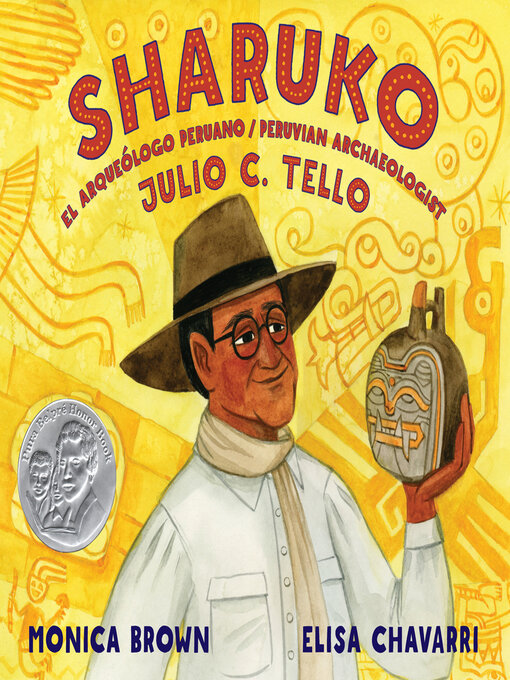
Pura Belpré Illustrator Award Honor - American Library Association (ALA)
A fascinating bilingual picture book biography of Peruvian archaeologist and national icon Julio C. Tello, who unearthed Peru's ancient cultures and fostered pride in the country's Indigenous history.
Una fascinante biografía bilingüe ilustrada del arqueólogo peruano e ícono nacional Julio C. Tello, quien desenterró las antiguas culturas del Perú y fomentó el orgullo por la historia indígena del país.
Growing up in the late 1800s, Julio Tello, an Indigenous boy, spent time exploring the caves and burial grounds in the foothills of the Peruvian Andes. Nothing scared Julio, not even the ancient human skulls he found. His bravery earned him the boyhood nickname Sharuko, which means "brave" in Quechua, the language of the Native people of Peru.
At the age of twelve, Julio moved to Lima to continue his education. While in medical school, he discovered an article about the skulls he had found. The skulls had long ago been sent to Lima to be studied by scientists. The article renewed Julio's interest in his ancestry, and he decided to devote his medical skills to the study of Peru's Indigenous history.
Over his lifetime, Julio Tello made many revolutionary discoveries at archaeological sites around Peru, and he worked to preserve the historical treasures he excavated. He showed that Peru's Indigenous cultures had been established thousands of years ago, disproving the popular belief that Peruvian culture had been introduced more recently from other countries. He fostered pride in his country's Indigenous ancestry, making him a hero to all Peruvians. Because of the brave man once known as Sharuko, people around the world today know of Peru's long history and its living cultural legacy.
Durante su infancia a finales del siglo XIX, Julio Tello, un niño indígena, exploraba las cuevas y loscementerios en las estribaciones de los Andes peruanos. Nada lo asustaba, ni siquiera los antiguos cráneos humanos que encontraba. Su valentía le ganó el apodo de Sharuko, que significa "valiente" en quechua, la lengua de los pueblos originarios del Perú.
A los doce años, Julio se mudó a Lima para continuar sus estudios. Mientras estudiaba medicina, descubrió un artículo sobre los cráneos que había encontrado. Estos cráneos habían sido enviados a Lima hacía mucho tiempo para ser estudiados por científicos. El artículo reanimó el interés de Julio por sus ancestros, y decidió dedicar sus conocimientos médicos al estudio de la historia indígena del Perú.
A lo largo de su vida, Julio Tello realizó numerosos descubrimientos revolucionarios en sitios arqueológicos de todo el Perú y trabajó para preservar los tesoros históricos que excavaba. Demostró que las culturas indígenas del Perú se habían establecido hace miles de años, desmintiendo la creencia popular de que la cultura peruana había sido introducida recientemente desde otros países. Él fomentó el orgullo por la herencia indígena de su país, convirtiéndose en un héroe para todos los peruanos. Gracias a este valiente hombre, conocido como Sharuko, hoy en día personas de todo el mundo conocen la larga historia del Perú y su vivo legado cultural.